Introduction
Alzheimer’s disease is one of the most serious neurological disorders affecting older adults around the world. It gradually damages memory, thinking, reasoning, and the ability to perform everyday activities. As populations age, the number of people affected by Alzheimer’s disease and other forms of dementia is expected to increase, creating significant challenges for patients, families, healthcare professionals, and healthcare systems.
One of the biggest challenges in managing Alzheimer’s disease is obtaining an accurate diagnosis. For many years, doctors have relied on a combination of medical history, cognitive assessments, brain imaging, and laboratory tests. More specialized methods, including positron emission tomography (PET) scans and analysis of cerebrospinal fluid (CSF), can provide important evidence of the biological changes associated with Alzheimer’s disease. However, these methods can be expensive, time-consuming, invasive, or difficult to access.
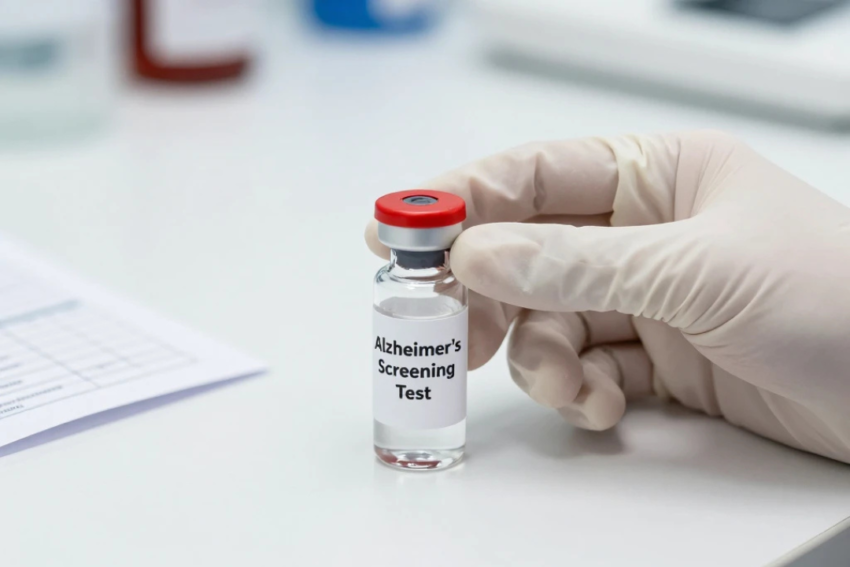
A major development in medical technology is changing this situation: blood tests that can detect biomarkers associated with Alzheimer’s disease.
In August 2026, the U.S. Food and Drug Administration (FDA) cleared Roche’s Elecsys Phospho-Tau (217P) Plasma blood test. The test is intended to aid in identifying Alzheimer’s-related amyloid pathology in people aged 55 and older who are experiencing cognitive decline. The FDA database records the device as a Class II immunoassay blood test for amyloid pathology assessment, with a decision date of August 19, 2026. FDA Access Data+1
This development represents an important step toward making Alzheimer’s-related biological testing easier and less invasive.
Understanding Alzheimer’s Disease
Alzheimer’s disease is a progressive disorder of the brain. It is the most common cause of dementia, although dementia itself is a broad term that describes problems with memory, thinking, and everyday functioning caused by different diseases and conditions.
In Alzheimer’s disease, abnormal biological changes occur in the brain. Two of the most well-known features are the accumulation of amyloid plaques and abnormal forms of tau protein.
Amyloid plaques are deposits that accumulate between nerve cells. Tau is a protein associated with the internal structure of neurons, and abnormal tau can form tangled structures in the brain.
These biological changes can begin years before severe symptoms become apparent.
This creates an important opportunity for modern medicine. If doctors can identify biological signs of Alzheimer’s disease earlier, they may be able to provide more accurate diagnoses and consider appropriate treatment and management options sooner.
What Are Biomarkers?
A biomarker is a measurable biological substance or characteristic that provides information about a disease or biological process.
In Alzheimer’s research, scientists have identified several biomarkers associated with the disease.
Two particularly important biomarkers are amyloid beta and phosphorylated tau, commonly abbreviated as p-tau.
Phosphorylated tau proteins are forms of tau that have undergone chemical changes involving phosphate groups. Certain forms, including p-tau217, have become increasingly important in Alzheimer’s research because their levels in blood can be associated with Alzheimer’s-related changes in the brain.
The new Roche blood test measures phospho-tau 217 (p-tau217) in plasma.
Instead of requiring doctors to directly examine the brain for biological evidence, the test provides information from a blood sample.
How the New Blood Test Works
The Elecsys Phospho-Tau (217P) Plasma test is a laboratory-based immunoassay.
A blood sample is collected from the patient and processed to measure the amount of p-tau217 in the plasma.
The result provides information that can help healthcare professionals assess whether Alzheimer’s-related amyloid pathology is likely to be present.
The FDA classifies the device as an immunoassay blood test for amyloid pathology assessment. FDA Access Data
The technology is important because p-tau217 is associated with the biological processes occurring in Alzheimer’s disease.
However, it is essential to understand that the test is not simply a blood test that independently declares whether a person has Alzheimer’s disease.
It is intended to be interpreted together with other clinical information and assessments.
The FDA’s classification of these tests reflects their role as tools that can aid clinicians in evaluating patients experiencing cognitive decline. FDA Access Data
Why a Blood Test Is Significant
Traditional methods for detecting Alzheimer’s-related pathology have several limitations.
PET scans can visualize amyloid plaques in the brain, but they require specialized equipment and are relatively expensive. They also involve exposure to radiation.
Cerebrospinal fluid testing can provide valuable biological information, but obtaining CSF generally requires a lumbar puncture, which is more invasive than taking a blood sample.
A blood test is much simpler.
Blood collection is already a routine part of modern healthcare. Hospitals, clinics, and laboratories around the world have extensive experience collecting and analyzing blood samples.
This means that blood-based biomarkers could potentially make Alzheimer’s-related testing more accessible.
The FDA previously highlighted these advantages when it cleared Fujirebio’s Lumipulse G pTau217/β-Amyloid 1-42 Plasma Ratio in May 2025. The agency described it as a less invasive option that could reduce reliance on PET scans. U.S. Food and Drug Administration
The 2026 Roche clearance therefore represents another important step in the rapidly developing field of blood-based Alzheimer’s diagnostics.
Who Can Use the Test?
The Roche test is intended to aid in identifying Alzheimer’s-related pathology in adults 55 years of age and older who are experiencing cognitive decline.
This is an important limitation.
The test is not intended to be used as a general screening test for every healthy person.
For example, someone without cognitive symptoms should not automatically assume that a blood biomarker test is appropriate simply because they are concerned about developing Alzheimer’s disease.
The intended population and clinical context matter.
Doctors must consider symptoms, medical history, cognitive testing, and other relevant information when deciding whether such testing is appropriate.
The Role of p-Tau217
The importance of p-tau217 is one of the major scientific developments behind modern Alzheimer’s blood tests.
Researchers have found that certain phosphorylated tau biomarkers can reflect pathological changes associated with Alzheimer’s disease.
Among these biomarkers, p-tau217 has attracted considerable scientific attention because of its relationship with amyloid and tau pathology.
The development of highly sensitive laboratory technologies has made it possible to detect extremely small quantities of these proteins in blood.
This is an important technological achievement.
For many years, researchers struggled to measure brain-related proteins accurately in blood because their concentrations can be extremely low.
Modern immunoassay technologies have improved the ability to detect these biomarkers.
Comparison With PET Scans
PET imaging remains an important method for identifying amyloid pathology.
During an amyloid PET scan, a specialized tracer is used to visualize amyloid deposits in the brain.
Although this can provide valuable information, PET imaging requires specialized facilities and equipment.
A blood test has the potential to be considerably simpler.
Instead of scheduling a specialized imaging procedure, a patient can have blood drawn and the sample analyzed in a laboratory.
This could potentially make Alzheimer’s-related biological assessment available to more patients.
However, blood tests should not automatically be considered a complete replacement for PET imaging.
There may be situations in which a physician needs more detailed information from brain imaging or another diagnostic method.
The appropriate test depends on the individual patient and the clinical question.
Comparison With Cerebrospinal Fluid Testing
CSF testing is another established method of examining Alzheimer’s biomarkers.
During a lumbar puncture, a healthcare professional collects a sample of cerebrospinal fluid from the lower back.
The sample can then be analyzed for biomarkers associated with Alzheimer’s disease.
CSF testing can provide valuable information, but it is more invasive than a standard blood draw.
Blood-based testing therefore has a major practical advantage.
If blood biomarkers can provide sufficiently reliable information, they could reduce the number of patients who need invasive or specialized testing.
This could be especially useful in healthcare systems where access to specialist diagnostic services is limited.
FDA Clearance in 2026
The 2026 regulatory milestone is significant.
According to the FDA’s official device database, Roche Diagnostics submitted the Elecsys Phospho-Tau (217P) Plasma test under the 510(k) pathway. The FDA received the submission on May 21, 2026, and issued its decision on August 19, 2026. The device was determined to be substantially equivalent to an appropriate legally marketed device. FDA Access Data
The test is classified as a Class II medical device under the FDA’s framework.
This demonstrates that blood-based Alzheimer’s diagnostics are becoming a more established part of the medical-device landscape.
The FDA’s total-product-life-cycle database now lists multiple blood tests for amyloid pathology assessment, including Roche’s p-tau181 and p-tau217 tests and Fujirebio’s earlier test. FDA Access Data
Making Diagnosis More Accessible
One of the greatest potential benefits of blood-based testing is accessibility.
Alzheimer’s diagnosis can be complicated, particularly in areas where specialist neurologists, PET scanners, and advanced diagnostic laboratories are limited.
A blood test could potentially be integrated into existing laboratory systems.
Reuters reported that Roche’s test is compatible with more than 4,500 Roche laboratory analyzers across the United States, while major laboratory networks including Labcorp and Quest Diagnostics planned to make the test available through their networks. Reuters
This infrastructure could help expand access to testing.
However, availability does not necessarily mean that every healthcare provider will immediately use the test or that every patient will qualify for it.
Clinical guidelines, physician judgment, insurance coverage, cost, laboratory capacity, and local healthcare policies will all influence adoption.
Earlier Diagnosis and Treatment
Another major potential benefit is earlier identification of Alzheimer’s-related pathology.
Alzheimer’s disease can begin developing biologically long before severe symptoms appear.
Modern Alzheimer’s treatments have also increased the importance of identifying appropriate patients based on underlying disease biology.
Blood biomarkers could make it easier for clinicians to determine whether a patient’s cognitive symptoms are consistent with Alzheimer’s-related pathology.
This could help doctors decide whether additional testing is appropriate and potentially identify patients who may be candidates for certain treatments.
However, a biomarker result alone should not determine treatment.
A medical professional must consider the patient’s complete clinical situation.
Reducing the Burden on Healthcare Systems
Healthcare systems around the world face increasing demand for dementia evaluation.
Traditional diagnostic pathways can involve multiple appointments, specialist consultations, imaging procedures, and laboratory tests.
A reliable blood test could potentially streamline some of these pathways.
For example, a physician might use a blood biomarker test as an initial assessment for a patient experiencing cognitive decline.
Patients with results indicating a lower likelihood of Alzheimer’s-related pathology might follow a different diagnostic pathway, while patients with results suggesting a higher likelihood could be referred for additional specialist evaluation.
This approach could potentially help healthcare systems use expensive diagnostic resources more efficiently.
However, this depends on how accurately the tests perform in real-world populations.
Limitations of Alzheimer’s Blood Tests
Despite the excitement surrounding these developments, blood tests have limitations.
The most important point is that they are not stand-alone diagnostic tools.
A blood biomarker can provide evidence about biological processes, but Alzheimer’s diagnosis involves much more than measuring one protein.
Doctors must consider symptoms, cognitive function, medical history, medications, other neurological conditions, and other possible causes of cognitive decline.
The FDA has emphasized this principle in its regulation of blood-based Alzheimer’s tests. Its 2025 clearance of Fujirebio’s test specifically stated that the test was not intended as a screening or stand-alone diagnostic test and that additional clinical evaluation should be used when determining treatment. U.S. Food and Drug Administration
False Positive and False Negative Results
Another important concern is the possibility of incorrect results.
A false positive occurs when a test suggests that Alzheimer’s-related pathology is present when it is not.
A false negative occurs when a test fails to identify pathology that is actually present.
Both situations can cause problems.
A false positive result could lead to anxiety, additional testing, and potentially unnecessary treatment.
A false negative result could delay further evaluation and appropriate care.
For this reason, doctors must interpret blood biomarker results carefully and in the context of the patient’s overall clinical picture.
Cost and Availability
Although blood tests may be less expensive and easier to administer than PET scans, cost and accessibility remain important considerations.
The price of a medical test includes more than the cost of collecting blood. Laboratories need specialized equipment, trained personnel, quality-control procedures, and appropriate infrastructure.
Insurance coverage and healthcare policies may also influence whether patients can access the test.
Reuters reported that Roche had not disclosed the price of the new test at the time of its August 2026 report. Reuters
As these tests become more widely adopted, pricing and reimbursement policies will likely become increasingly important.
Ethical Considerations
The development of Alzheimer’s blood tests also creates ethical questions.
One question concerns when people should be tested.
If a person learns that they have biomarkers associated with Alzheimer’s disease before experiencing significant symptoms, the information could affect their emotional well-being, family planning, employment decisions, financial planning, and other aspects of life.
Patients therefore need appropriate counseling and clear explanations of what test results actually mean.
Privacy is another important issue.
Medical biomarker information is highly personal. Healthcare providers and laboratories must ensure that patient data is protected from unauthorized access.
Patients should also understand the purpose of testing and how their results will be used.
The Future of Alzheimer’s Diagnostics
The field of Alzheimer’s diagnostics is likely to continue developing rapidly.
Future blood tests may combine several biomarkers rather than relying on a single measurement.
Researchers are also studying different forms of amyloid and tau, as well as biomarkers associated with neurodegeneration and inflammation.
Artificial intelligence may eventually be combined with blood biomarkers, brain imaging, genetic information, and clinical data to create more comprehensive diagnostic systems.
Such systems could potentially estimate an individual’s risk profile and help doctors determine which diagnostic or treatment pathway is most appropriate.
However, these technologies will require extensive scientific validation before they can be routinely used.
A New Era of Personalized Medicine
Blood-based Alzheimer’s diagnostics are also an example of the movement toward personalized medicine.
Personalized medicine aims to provide healthcare based on the biological characteristics and individual circumstances of each patient.
Instead of treating every person with memory problems in exactly the same way, doctors could use biomarkers to understand the underlying biological cause of a patient’s symptoms.
This could make diagnosis more precise and potentially allow treatments to be targeted toward patients most likely to benefit.
The development of p-tau217 testing is therefore important not only because it offers a simpler test, but because it reflects a broader change in how Alzheimer’s disease is understood and managed.
Conclusion
The development of blood tests for Alzheimer’s disease represents one of the most promising advances in modern medical diagnostics.
The FDA’s August 2026 clearance of Roche’s Elecsys Phospho-Tau (217P) Plasma test provides another important milestone in this rapidly developing field. The test is intended to aid in identifying Alzheimer’s-related amyloid pathology in adults aged 55 and older who are experiencing cognitive decline. FDA Access Data+1
The significance of this technology lies in its simplicity. A blood sample is far less invasive and generally easier to obtain than cerebrospinal fluid, while avoiding the specialized procedures required for PET imaging.
At the same time, it is important to maintain realistic expectations. The test is not a stand-alone diagnosis for Alzheimer’s disease. A positive or negative result must be interpreted alongside clinical information and, when necessary, additional testing.
Nevertheless, blood-based biomarkers could transform the Alzheimer’s diagnostic pathway. They may help doctors identify biological evidence of disease earlier, prioritize patients for further investigation, reduce reliance on expensive or invasive procedures, and potentially improve access to modern Alzheimer’s care.
The technology also illustrates how medical science is moving toward a future in which diseases can be identified through increasingly precise biological signals.
For patients and families affected by memory loss, the possibility of a simpler and more accessible test offers hope. For doctors and healthcare systems, it provides another tool for improving diagnosis. And for researchers, it opens the door to increasingly personalized approaches to Alzheimer’s disease.
As research continues and blood-based biomarkers become more refined, the humble blood sample could become an increasingly important part of how Alzheimer’s disease is detected, understood, and managed.
The future of Alzheimer’s diagnosis may therefore be considerably less invasive than the past—and potentially much more accessible to the people who need it most.