Introduction
Technology is changing medicine at an extraordinary pace. Artificial intelligence, robotics, advanced imaging, wearable sensors, and genetic technologies are creating new possibilities for diagnosing and treating diseases that were once considered extremely difficult to manage. Among the most fascinating developments is the emergence of brain-computer interfaces (BCIs).
A brain-computer interface is a technology that creates a direct communication pathway between the brain and an external computer or electronic device. Instead of relying entirely on muscles to communicate or control a machine, a BCI can interpret electrical or other signals produced by the brain and convert them into commands.
For people with severe paralysis, this technology could have life-changing consequences. A person who cannot move their arms or speak may potentially use brain signals to communicate, control a computer, operate a wheelchair, or interact with assistive devices.
For many years, BCIs were primarily experimental technologies used in research laboratories. However, recent developments are bringing them closer to clinical applications. Advances in neural recording, artificial intelligence, signal processing, implantable electrodes, and machine learning are allowing researchers to decode brain activity with increasing accuracy.
Recent research has demonstrated long-term use of implanted BCIs for speech and computer control in people with paralysis. A 2026 study published in Nature Medicine reported nearly two years of home use by a person with amyotrophic lateral sclerosis (ALS), demonstrating that these systems can potentially operate outside controlled laboratory environments.
The movement of BCIs toward clinical use could represent a major change in the treatment of neurological disability. However, significant scientific, medical, ethical, and regulatory challenges remain.
What Is a Brain-Computer Interface?
A brain-computer interface is a system that allows brain activity to communicate directly with an external device.
Normally, the brain controls the body through the nervous system. When someone wants to move a hand, for example, the brain produces neural signals that travel through the nervous system to the muscles.
A neurological injury or disease can interrupt this pathway.
A person may still have the intention to move or speak, but the muscles may no longer respond effectively.
A BCI attempts to bypass the damaged pathway.
Sensors detect neural activity, a computer analyzes the signals, and software converts them into an action.
The process can be simplified as:
Brain activity → neural recording → signal processing → artificial intelligence → computer command
Depending on the system, the final output could be a word, cursor movement, robotic-arm movement, wheelchair command, or another digital action.
Types of Brain-Computer Interfaces
BCIs can generally be divided into several categories based on how brain signals are collected.
Invasive BCIs
Invasive BCIs involve surgically implanted electrodes in or near the brain.
The major advantage is that they can record relatively detailed neural activity.
Because the sensors are close to neurons, they can potentially provide high-quality signals for controlling sophisticated devices.
However, surgery introduces risks such as infection, bleeding, and complications associated with implanted medical hardware.
Non-Invasive BCIs
Non-invasive systems collect brain signals without surgery.
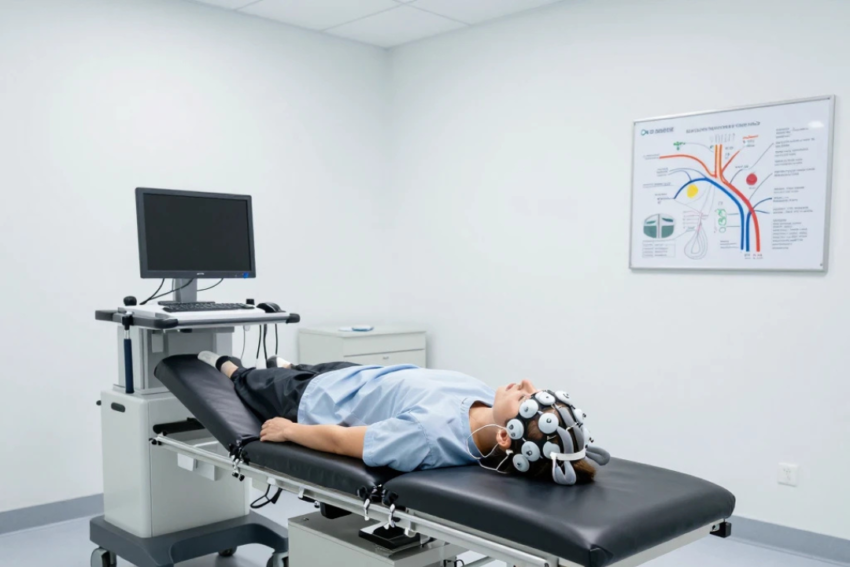
Electroencephalography, or EEG, is one of the most common approaches. EEG sensors are placed on the scalp to measure electrical activity from the brain.
The major advantage is safety and convenience. However, signals recorded from outside the skull are generally weaker and less precise than signals collected using implanted electrodes.
Partially Invasive Systems
Some technologies use sensors positioned beneath the skull but outside the brain tissue.
These systems attempt to balance signal quality with reduced invasiveness.
Each approach has advantages and disadvantages, and researchers continue to investigate which technologies are most appropriate for different clinical applications.
Why BCIs Matter for Paralysis
One of the most important potential applications of BCIs is restoring communication and movement to people with paralysis.
Paralysis can result from many conditions, including spinal cord injuries, stroke, ALS, and other neurological disorders.
Traditional assistive technologies can be helpful, but they often require some remaining physical ability.
For example, a person may use a keyboard if they can move their fingers or an eye-tracking system if they can control their eyes.
Severe paralysis can make even these methods difficult.
A BCI could potentially bypass these physical limitations by allowing a person to control a device using brain activity.
This could provide a new level of independence.
Brain-Computer Interfaces and Speech
Speech restoration is one of the most promising areas of BCI research.
People with ALS and other neurological disorders may lose the physical ability to speak while retaining their ability to think and understand language.
Researchers have developed speech BCIs that attempt to decode neural signals associated with intended speech.
In recent research, electrodes implanted in the motor cortex recorded neural activity while participants attempted to speak. Artificial intelligence algorithms then translated those signals into words and generated synthetic speech.
A major 2026 study demonstrated long-term independent use of such technology in a home environment. The participant, who had ALS, used the system for thousands of hours over nearly two years. The system translated attempted speech into words and also allowed computer control.
This represents an important transition.
Previously, a successful BCI experiment might involve a participant using the technology for a short session while researchers monitored every part of the system.
Long-term home use is much closer to what would be required for an actual medical device.
Artificial Intelligence as the Key Technology
Artificial intelligence plays a central role in modern BCIs.
Brain signals are incredibly complex. They contain patterns that are not directly understandable as words, movements, or computer commands.
Machine-learning algorithms can be trained to identify relationships between neural activity and intended actions.
For example, if a person repeatedly attempts to say particular words while the system records their brain activity, an AI model can learn the patterns associated with those words.
With enough training data, the system can begin predicting what the person intends to communicate.
This is similar to pattern recognition, but the application is much more personal because the model must learn an individual’s unique neural signals.
From Words to Natural Speech
Early communication devices often required users to select letters or symbols manually.
This can be slow.
Modern speech BCIs aim to bypass this process by decoding intended speech more directly.
Instead of selecting:
H → E → L → L → O
the user may attempt to say “hello,” while the system recognizes the corresponding neural pattern and produces the word.
The ultimate goal is natural communication.
Researchers are working to improve:
- Speech speed
- Accuracy
- Vocabulary size
- Response time
- Voice quality
- Emotional expression
- Reliability
- Ease of use
Recent studies demonstrate significant progress in each of these areas.
Personalized Digital Voices
Another important development is personalized speech synthesis.
When a person loses the ability to speak, they may lose more than a communication method. Their voice can be an important part of their identity.
Researchers have therefore explored ways to create digital voices based on recordings of a person’s natural speech before neurological disease severely affects their ability to talk.
A personalized voice can make communication feel more natural and personal than a generic computer-generated voice.
This may have psychological and social benefits, particularly for people who want to maintain a sense of identity through their communication.
Controlling Computers With the Brain
BCIs are not limited to speech.
Another major application is computer control.
A person can potentially use neural activity to move a computer cursor, select icons, type messages, browse websites, and interact with software.
This could be extremely valuable for individuals with severe physical disabilities.
Digital technology is now central to education, employment, communication, entertainment, banking, and social interaction.
Giving a person with paralysis direct computer access could therefore significantly improve independence.
The 2026 long-term study demonstrated that BCI technology could support both speech and cursor control in a home environment.
Robotic Arms and Physical Movement
Researchers are also developing BCIs that can control robotic limbs.
A person with paralysis could potentially generate brain signals representing an intended movement, such as reaching for an object.
The BCI would translate those signals into commands for a robotic arm.
This could allow the user to perform movements that their biological muscles can no longer perform.
Some experimental systems have demonstrated the ability to control robotic arms with increasing precision.
The long-term objective is to create systems capable of performing useful everyday actions rather than simple laboratory movements.
For example, a future system could potentially allow someone to pick up a cup, manipulate an object, or operate assistive equipment.
BCIs and Spinal Cord Injury
Spinal cord injury is another important potential application.
When the spinal cord is damaged, communication between the brain and muscles can be interrupted.
A BCI could potentially bypass the damaged region.
Researchers are exploring combinations of brain implants, computers, electrical stimulation, and robotic or wearable devices to restore movement.
In some approaches, brain signals are decoded into commands that stimulate muscles or control external devices.
The broader concept is sometimes described as a neural bypass.
Instead of repairing the entire damaged nervous system, the technology creates an alternative pathway around the injury.
BCIs After Stroke
Stroke can cause paralysis, speech difficulties, and other neurological impairments.
Researchers are investigating whether BCIs can help stroke survivors communicate and recover movement.
Speech BCIs are particularly promising for people who have lost the ability to speak.
Other systems are being studied as rehabilitation tools. The idea is that a BCI could detect an individual’s intention to move and then provide feedback or stimulation that supports rehabilitation.
This area is still developing, but it demonstrates that BCIs could potentially serve both as assistive technologies and therapeutic tools.
The Importance of Long-Term Use
One of the biggest challenges in BCI research is durability.
A system may work extremely well for a short experiment but become less effective over months or years.
Brain signals can change, electrodes can move or degrade, and software may need adjustment.
This is why long-term studies are so important.
The 2026 study involving home use of a speech and cursor-control BCI is significant because it demonstrated sustained performance over a long period rather than simply a short laboratory demonstration.
Long-term reliability will be essential if BCIs are eventually prescribed as clinical devices.
Safety Challenges
Implantable BCIs require surgery.
Any brain surgery carries potential risks.
These can include infection, bleeding, tissue damage, and complications associated with implanted electronics.
The benefits of a BCI must therefore be weighed against these risks.
Medical researchers need to demonstrate that the technology provides meaningful benefits while maintaining an acceptable safety profile.
The hardware must also be reliable.
If an implanted device stops working, repairing or replacing it may require another medical procedure.
Cybersecurity and Neural Data
As BCIs become more sophisticated, cybersecurity will become increasingly important.
A BCI collects highly sensitive information about brain activity.
This data could potentially reveal information about a person’s movements, intended communication, or other neural activity.
Protecting this information is therefore essential.
Healthcare organizations and technology developers will need strong security measures to prevent unauthorized access.
Patients should also have clear information about:
- What data is collected
- Where it is stored
- Who can access it
- How it is used
- Whether it can be shared
- How it can be deleted
The development of neural technology therefore creates new questions about digital privacy.
The Ethical Question of Mind Reading
One of the most interesting ethical questions is whether future BCIs could decode thoughts that a person does not intentionally communicate.
Current speech BCIs generally require users to attempt or intentionally produce speech-related brain activity.
However, researchers are also investigating the possibility of decoding inner speech, meaning words that a person silently imagines.
This could provide another communication pathway for people who cannot physically speak.
At the same time, it creates serious ethical concerns.
People should have control over their thoughts and private mental activity. A technology capable of decoding neural signals must therefore be designed so that users maintain control over what is communicated.
The concept of “mental privacy” could become an important issue in future technology regulation.
Accessibility and Cost
Even if BCIs become clinically successful, another challenge will be affordability.
Advanced brain implants require highly specialized surgery, equipment, software, training, and follow-up care.
If these technologies are extremely expensive, only a small number of patients may have access to them.
Healthcare systems and insurance providers will therefore need to determine how these technologies should be funded.
Researchers are working toward smaller, simpler, and more reliable systems that could eventually reduce costs.
Regulation and Clinical Trials
Before BCIs can become widely available, they must undergo rigorous clinical evaluation.
Researchers need to demonstrate that the technology is:
- Safe
- Reliable
- Effective
- Durable
- Clinically useful
Regulatory authorities must also determine appropriate standards for these devices.
This process is especially important because BCIs combine several technologies: medical implants, neural recording, software, artificial intelligence, and sometimes robotic systems.
Regulation will need to consider all of these components.
The Future of Brain-Computer Interfaces
The long-term future of BCIs could be transformative.
Imagine a person with complete paralysis being able to communicate through a digital voice, control a computer, operate a wheelchair, and interact with a robotic arm using only neural signals.
These capabilities could dramatically increase independence.
Future systems may also become smaller and more portable.
Instead of large laboratory equipment, users could potentially have compact devices that operate continuously in everyday environments.
Artificial intelligence could further improve performance by learning from the user and adapting to changes in neural signals.
Beyond Disability
Although disability rehabilitation is currently one of the most important applications, BCI research could eventually influence other areas of medicine.
Scientists are investigating neural interfaces for conditions involving movement disorders, sensory loss, and neurological disease.
There is also interest in using neural interfaces to communicate with prosthetic limbs and sensory devices.
In the long term, researchers may develop systems that allow artificial devices to provide information back to the brain, creating two-way communication between humans and machines.
Such technologies could potentially restore both movement and sensation.
However, these possibilities remain subjects of active research rather than established medical treatments.
Conclusion
Brain-computer interfaces are moving from the world of experimental neuroscience toward potential clinical use.
Recent advances in artificial intelligence, neural recording, implantable electrodes, and signal processing have dramatically improved what these systems can accomplish. Speech BCIs can translate attempted speech into words, personalized digital voices can make communication more natural, and computer-control systems can provide people with severe paralysis greater access to digital technology.
The 2026 long-term study involving a person with ALS is particularly important because it demonstrated that an implanted BCI could be used for thousands of hours in a home environment rather than only during short laboratory experiments.
However, important challenges remain. Researchers must continue improving accuracy, speed, durability, portability, and safety. Surgical risks, cybersecurity, neural-data privacy, cost, regulation, and ethical questions must all be addressed.
The development of BCIs illustrates a broader transformation in medicine. Instead of treating the brain and technology as completely separate systems, researchers are developing technologies that allow them to communicate directly.
For people who have lost the ability to speak or move because of neurological disease or injury, this could eventually mean something extraordinary: the ability to interact with the world through their own brain signals.
Brain-computer interfaces are not yet a routine solution for paralysis, and much research remains before they can become widely available. Nevertheless, the progress of recent years suggests that the boundary between neuroscience, artificial intelligence, and medical technology is becoming increasingly connected.
The future may not simply involve machines that assist the human body. It may involve machines that communicate directly with the human brain, helping restore abilities that disease or injury has taken away.