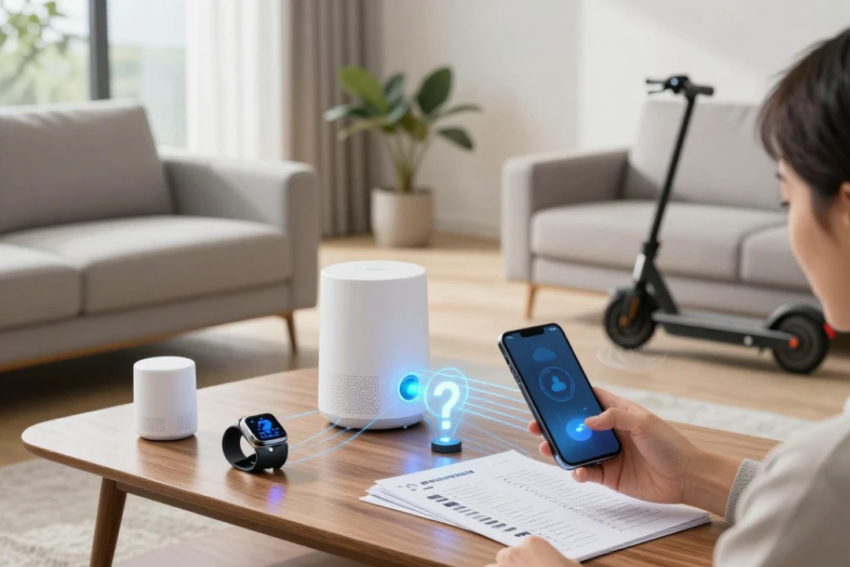
Artificial Intelligence, commonly known as AI, has become an important part of modern life. A technology that once seemed to belong only to science-fiction movies is now being used in smartphones, homes, schools, hospitals, banks, businesses, vehicles, and entertainment platforms. In many cases, people use AI every day without even realizing that artificial intelligence is working behind the scenes.
AI refers to computer systems that can perform tasks that normally require human intelligence. These tasks include understanding language, recognizing images, learning from data, identifying patterns, making predictions, solving problems, and generating content. The rapid growth of computing power, digital data, and machine-learning technologies has allowed AI to become increasingly capable.
The influence of AI can be seen in simple activities such as asking a voice assistant a question, receiving a recommended video, using a navigation application, unlocking a phone with facial recognition, or filtering unwanted email. At a larger scale, AI is being used to support doctors, scientists, teachers, engineers, and business professionals.
Artificial Intelligence offers many benefits, but it also creates challenges. Concerns about privacy, misinformation, employment, security, bias, and excessive dependence on technology are becoming increasingly important. Understanding both the advantages and disadvantages of AI is essential as society continues to adopt it.
What Is Artificial Intelligence?
Artificial Intelligence is a branch of computer science that focuses on developing machines and software capable of performing tasks associated with human intelligence.
Traditional computer programs generally follow instructions created by programmers. AI systems, particularly those based on machine learning, can learn patterns from data and use those patterns to make predictions or generate responses.
For example, a traditional program might be explicitly instructed to identify a particular type of object using a fixed set of rules. A machine-learning system can instead be trained using many examples and learn which characteristics are associated with that object.
AI can be used for language processing, image recognition, recommendation systems, robotics, data analysis, and content generation.
As these technologies have improved, AI has moved from specialized research environments into everyday consumer products and services.
AI in Smartphones
Smartphones are among the most common places where people encounter AI.
Modern phones use AI for facial recognition, photography, speech recognition, text prediction, spam filtering, and personalized features.
When a smartphone automatically improves the lighting or focus of a photograph, AI-based image-processing techniques may be involved.
Voice assistants can recognize spoken questions and convert them into commands. Predictive text systems can suggest words while a person is typing.
AI can also help identify suspicious calls and unwanted messages.
These features may seem small, but together they demonstrate how deeply AI has become integrated into personal technology.
AI in Search Engines
Search engines are another important example of AI in everyday life.
When someone enters a question or phrase into a search engine, intelligent systems help determine which information is most relevant.
Modern search technologies can interpret the meaning behind a query rather than simply matching individual words.
AI can also help identify relationships between different pieces of information and provide more useful results.
The development of conversational AI has further changed how people search for information. Instead of entering short keywords, users can ask questions in natural language and receive conversational responses.
However, users should remember that AI-generated answers can sometimes contain errors. Important information should be verified using reliable sources.
AI in Social Media
Social media platforms use AI extensively.
AI algorithms analyze user behavior, such as the types of posts people interact with, the videos they watch, and the accounts they follow.
This information can be used to personalize the content shown to each user.
For example, if someone frequently watches videos about cooking, a platform may recommend more cooking-related content.
AI can also help identify spam, detect suspicious activity, moderate content, and recommend accounts.
Personalized recommendations can make social media more convenient and engaging. However, they also raise concerns about how much information platforms collect about users and how recommendation algorithms influence people’s behavior.
AI in Entertainment
AI has transformed the entertainment industry.
Streaming platforms can use algorithms to recommend movies, television programs, music, and other content based on user preferences.
Music applications may analyze listening patterns and create personalized playlists.
Video platforms can recommend content based on viewing history.
AI is also increasingly being used to create and edit media. It can assist with visual effects, animation, music production, writing, and image generation.
These tools can help creators experiment with new ideas and reduce the time required for certain technical tasks.
At the same time, AI-generated entertainment raises questions about copyright, originality, and the role of human creators.
AI in Online Shopping
Artificial Intelligence has also changed the way people shop online.
E-commerce websites can use AI to recommend products based on previous searches, purchases, and browsing behavior.
For example, someone searching for sports equipment may receive recommendations for related clothing or accessories.
AI can also help businesses forecast demand and manage inventory.
Customer-service chatbots can answer common questions about products, orders, returns, and delivery.
These systems can make shopping more convenient, but they also depend on collecting and analyzing customer information. Consumers should therefore remain aware of how their data is being used.
AI in Banking and Finance
Banks and financial institutions use AI for many purposes.
One important application is fraud detection. AI systems can analyze transactions and identify patterns that may indicate suspicious activity.
For example, if a transaction differs significantly from a customer’s normal behavior, an automated system may flag it for further investigation.
AI can also be used for customer support, risk analysis, financial forecasting, and document processing.
These applications can help financial institutions operate more efficiently and respond quickly to potential threats.
However, financial AI systems must be carefully designed because incorrect decisions can affect people’s finances and access to services.
AI in Healthcare
Healthcare is one of the most important areas where AI is being applied.
Doctors and medical researchers have to work with enormous amounts of information. AI can help analyze medical images, patient records, laboratory results, and scientific research.
AI can assist healthcare professionals in identifying patterns that may be associated with certain diseases.
It can also support drug discovery and medical research by analyzing large biological and chemical datasets.
For patients, AI-powered tools can assist with appointment scheduling, general health information, reminders, and remote monitoring.
Wearable devices can collect information such as heart rate, activity, and sleep patterns. AI can analyze this information and potentially identify unusual patterns.
However, AI should not replace qualified healthcare professionals. Medical decisions require clinical judgment and an understanding of individual circumstances.
AI in Education
Artificial Intelligence is increasingly becoming part of education.
Students can use AI tools to receive explanations, practice subjects, generate study questions, summarize difficult material, and explore new topics.
Teachers can use AI to create learning materials, organize information, provide certain types of feedback, and reduce administrative workloads.
AI can also support personalized learning. Students have different strengths and weaknesses, and intelligent systems may be able to adapt educational material according to individual needs.
However, excessive dependence on AI can create problems.
If students use AI to complete all of their assignments without understanding the material, they may fail to develop important skills such as writing, reasoning, creativity, and independent research.
AI should therefore be used as a learning assistant rather than as a replacement for genuine effort.
AI in Transportation
Artificial Intelligence is increasingly influencing transportation.
Navigation applications use intelligent algorithms to analyze traffic conditions and suggest routes.
Modern vehicles include driver-assistance technologies that can help with tasks such as parking, emergency braking, lane monitoring, and detecting nearby objects.
AI is also being used in research into autonomous vehicles.
If autonomous transportation technology becomes sufficiently reliable and widely adopted, it could change how people travel and how goods are delivered.
However, safety is a major concern. Transportation systems involve human lives, so automated technologies must be carefully tested and regulated.
AI in the Home
AI is also entering people’s homes.
Smart speakers and virtual assistants can respond to voice commands, play music, provide information, set reminders, and control compatible devices.
Smart home systems can automatically adjust lighting, temperature, or other settings based on user preferences.
Some household devices can learn usage patterns and optimize their operation.
These technologies can improve convenience and energy efficiency.
However, smart devices can also collect information about household activities. This makes privacy and cybersecurity important considerations.
AI at Work
Artificial Intelligence is changing the modern workplace.
Employees can use AI to summarize documents, analyze data, organize information, draft communications, create presentations, and automate repetitive tasks.
Businesses can use AI to improve customer service, marketing, forecasting, and operational efficiency.
This can save time and allow employees to focus on more complex tasks.
However, AI can also change employment patterns.
Some repetitive tasks may become automated, potentially reducing demand for certain types of work. At the same time, new roles may emerge in AI development, data analysis, technology management, and AI governance.
Workers will increasingly need to develop skills that complement AI, including creativity, communication, critical thinking, adaptability, and problem-solving.
Benefits of Artificial Intelligence
AI provides numerous benefits in everyday life.
Convenience
AI can automate many routine tasks. Voice assistants, recommendation systems, smart devices, and automated customer support can save time.
Increased Productivity
AI can process information quickly and help people complete certain tasks more efficiently.
Personalization
AI can analyze individual preferences and provide personalized recommendations for entertainment, shopping, education, and other services.
Improved Healthcare
AI can support medical professionals and researchers by helping analyze complex information and identify patterns.
Better Accessibility
AI-powered speech recognition, translation, captioning, and assistive technologies can help people overcome certain communication and accessibility barriers.
Faster Information Processing
AI can analyze enormous quantities of information much faster than humans can manually process it.
Support for Scientific Research
AI can help researchers explore complex datasets and identify relationships that may lead to new discoveries.
These advantages explain why AI is becoming increasingly common.
Challenges of Artificial Intelligence
Despite its benefits, AI creates significant challenges.
Privacy
AI systems often require large amounts of data. This creates concerns about how personal information is collected, stored, and used.
People may not always know how much information is being analyzed about them.
Misinformation
AI can generate realistic text, images, audio, and video. These capabilities can be misused to create misleading or false content.
People may find it increasingly difficult to distinguish between genuine and AI-generated information.
Job Displacement
Automation may reduce the need for workers to perform certain repetitive tasks.
Although AI can create new opportunities, workers may need retraining to adapt to changing job requirements.
Bias
AI systems can produce unfair results if they are trained using biased or incomplete data.
This is especially concerning when AI is used in important areas such as employment, finance, education, or healthcare.
Security
AI can be used for both cybersecurity and malicious activities.
As AI becomes more powerful, organizations must develop stronger security systems to prevent misuse.
Overdependence
People may become too dependent on AI for decisions and information.
Excessive dependence could weaken independent thinking and problem-solving skills.
The Importance of Responsible AI Use
The benefits of AI can only be fully realized if the technology is used responsibly.
Individuals should understand that AI systems can make mistakes. AI-generated information should be checked when accuracy is important.
Organizations should protect user data and establish clear policies for responsible AI use.
Developers should test AI systems for reliability, fairness, and security.
Governments and regulators also have an important role in establishing appropriate standards.
Education is equally important. People need AI literacy so that they understand what AI can do, what its limitations are, and how to evaluate AI-generated information.
The Future of AI in Everyday Life
AI is likely to become even more integrated into everyday activities.
Future systems may provide more personalized assistance, improve accessibility, support healthcare, automate additional workplace tasks, and make smart homes and transportation systems more advanced.
AI may also become less visible. Instead of opening a separate AI application, people may interact with intelligent features embedded into ordinary devices and services.
This could make technology more useful and natural, but it also means people will need to pay greater attention to how automated systems make decisions and use personal information.
The future should therefore focus not only on making AI more powerful but also on making it more trustworthy, transparent, safe, and beneficial.
Humans and AI Working Together
The most positive future is one in which humans and AI work together.
AI can process large quantities of information, identify patterns, automate repetitive tasks, and provide suggestions.
Humans bring creativity, emotional intelligence, ethical reasoning, communication, and the ability to understand complex social situations.
For example, a doctor can use AI to analyze medical information while making the final decision based on professional expertise and the patient’s needs.
A teacher can use AI to prepare educational resources while continuing to provide personal support to students.
A business employee can use AI to analyze data while applying human judgment to make strategic decisions.
This partnership can allow technology to enhance human abilities rather than simply replace them.
Conclusion
Artificial Intelligence has become a major part of everyday life. It is present in smartphones, search engines, social media, entertainment, shopping, banking, healthcare, education, transportation, homes, and workplaces.
The technology provides many benefits. It can save time, improve productivity, personalize services, support medical research, improve accessibility, and help people process information.
However, AI also creates important challenges. Privacy, misinformation, bias, cybersecurity, employment changes, and excessive dependence on technology all require serious attention.
The future of AI should therefore be guided by responsible innovation. People need to understand both the capabilities and limitations of intelligent systems. Businesses and governments need to protect users and establish appropriate safeguards. Developers need to create systems that are reliable, secure, fair, and transparent.
Artificial Intelligence is not simply a technology of the future; it is already part of the present. Its influence will continue to grow as new applications are developed.
The key question is not whether AI will change everyday life—it already has. The more important question is how humanity chooses to use it.
If AI is developed responsibly and used wisely, it can become a powerful tool for improving productivity, education, healthcare, communication, accessibility, and quality of life. The best future will not be one in which machines control human life, but one in which intelligent technology works alongside people to create a safer, more efficient, and more innovative world.